Inside the Market: The True State of the Technology sector in Yorkshire
Yorkshire’s Technology sector continues to evolve beyond the headlines, combining sustained growth with increasing maturity. To understand what is really happening on the ground - and what lies ahead - we spoke to investors, advisers and finance leaders shaping the region’s most ambitious technology businesses.
Inside the Market: The True State of the Technology sector in Yorkshire
Yorkshire’s Technology sector continues to evolve beyond the headlines, combining sustained growth with increasing maturity. To understand what is really happening on the ground - and what lies ahead - we spoke to investors, advisers and finance leaders shaping the region’s most ambitious technology businesses.

The Technology sector has become one of the most successful sectors across Yorkshire, delivering sustained growth and accounting for a healthy proportion of deal activity across the region. For us, it is also a sector that directly shapes leadership demand, particularly at CFO and board level, as businesses scale, attract investment and prepare for future exits.
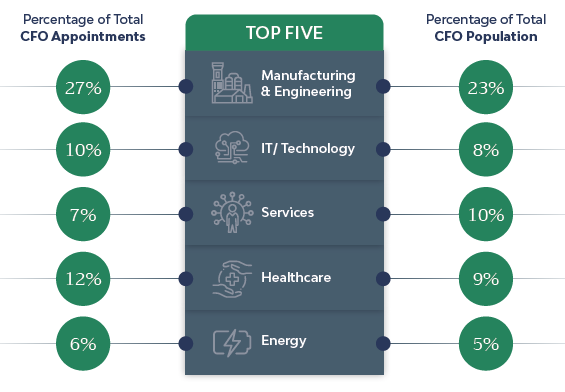
Over recent years, the sector has gone from strength to strength across the region. Today, Technology leaders account for 8% of the total CFO population and 10% of CFO appointments made in 2025, underlining both the maturity of the ecosystem and the pace of change within it.
As with the deals market, we are often asked by CFOs, FDs and founders what is really happening beneath the surface. Headlines can suggest a sector driven by hype or volatility, but the lived experience of those operating within it is often far more nuanced. Funding conditions, valuation expectations, AI adoption and the pressure to balance growth with efficiency are all shaping boardroom decisions in very real ways.
We wanted to dig deeper and speak directly to the experts who are deep within the sector. Our aim was to understand the true state of Technology across the region today, and the prospects for the year ahead:

- Jonny Sharp, Founder of Cerelo Advisory, a specialist corporate finance boutique advising technology and media companies across the UK, Europe and the US.

- Mike Clarke, Partner at YFM Equity Partners, with extensive experience investing in technology businesses across the North.

- David Linsley, CFO, with experience working across five technology SMEs, supporting growth, transformation and investor readiness from inside the business.
How would you describe the current state of the Technology and SaaS sector across Yorkshire, and how does it compare to what you were seeing in the recent past?
Jonny Sharp
The technology sector across Yorkshire has evolved remarkably in a relatively short space of time. A few years ago, it felt like an emerging growth area with lots of potential but not always the confidence or infrastructure to match its ambition. Today, it genuinely feels like a sector that’s come into its own; there's a maturity and momentum that simply wasn’t there before. Businesses are scaling, exporting, hiring, and building long-term strategies that work. What stands out most to me is the shift in mindset - founders are thinking bigger, teams are more diverse and skilled and investors are starting to view Yorkshire not as a ‘regional alternative’ but as a place where category-leading businesses can be and should be built. The collaboration between cities like Leeds, Sheffield and York has also strengthened (though there is room for more), helping create a more connected regional ecosystem rather than isolated pockets of innovation.
Another clear change is the depth of talent. The region’s universities have always been strong but the number of people choosing to stay and build their careers here has grown significantly and we have seen that with recent hires in our business. Hybrid and remote working have also opened doors, allowing Yorkshire tech firms to access national talent while still providing the advantages of operating in a region with a strong sense of community and identity.
In short, I believe Yorkshire's tech scene has moved beyond proving itself to now delivering real, sustainable impact with consistent creation and growth of market leading companies.
Mike Clarke
The technology sector across Yorkshire is in a notably more confident and optimistic phase, and in many respects is stronger than it has ever been. The region has moved beyond a start up narrative and is now producing a pipeline of credible scale ups with international ambitions. Compared with the recent past, today’s businesses are better capitalised, more commercially disciplined and led by increasingly experienced management teams.
Capital is undoubtedly tighter than it was in the post-Covid exuberance, but that has been a healthy correction and while valuation expectations have normalised, this has created healthier fundamentals and a sharper focus on sustainable growth. Yorkshire now has a visible next generation of breakout companies such as VetAI, HyperFinity, The Data City and Little Journey. They are well run, technology led and solving real, global problems.
David Linsley
Yorkshire appears to be emerging as a growth region for technology entrepreneurship, particularly in the fields of Education, Healthcare, AI and Tech Services. The Leeds market, in particular, is driving growth, with many of the local universities providing talent into the market.
The introduction of AI looks to be contributing to an increase in the number of tech startups. With the right stewardship, sensible growth and financing plans and execution, the region will hopefully experience continued success in the tech sector.
Looking at the most successful Technology businesses in Yorkshire, where have they created the greatest enterprise value, and what common factors do you see in how those businesses have been built and led?
Jonny Sharp
The strongest tech businesses in Yorkshire have created value by focusing on real, timely market problems rather than hypothetical future ones. They build products and services that address genuine customer needs today, and that clarity gives them an advantage when it comes to growth and investment. Their value comes not just from the technology itself but from how well they understand the sectors they serve. They solve concrete problems, they do it with precision, and they stay disciplined about what they’re trying to achieve.
Across the board, the most successful firms share a few common traits; (1) They have leadership teams that set clear direction and focus. They prioritise well, communicate openly and they empower their people to get on with the job. That clarity becomes even more important as they scale, in a sector whereby there are always options to develop the next new and shiny product. When a business grows quickly, the ability to keep everyone aligned from engineering and product through to marketing, finance and operations becomes a genuine competitive advantage; (2) Another key factor is their commercial maturity - leading tech companies make decisions with long-term value in mind, not short-term noise (appropriate adoption of AI being a prime example!). They invest where it matters, have a strong handle on their numbers and build repeatable, defensible revenue models. They might move fast, but they do it in a controlled, sustainable way; and (3) Culture plays a huge role. The best-performing Yorkshire tech businesses tend to be those where teams feel trusted, accountable and part of something meaningful. When leadership empowers people across technology, sales and operations performance naturally improves. That combination of clarity, commercial discipline and genuine empowerment is where the real enterprise value is created.
Mike Clarke
In my experience, the strongest value creation always comes from Founders who are product visionaries because they combine deep domain expertise from years in their sector with genuinely scalable technology.
The best Yorkshire tech companies tend not to shout the loudest, but they execute relentlessly, a good example is Force24 led by Adam Oldfield, a veteran marketeer who has gone on to build one of the most powerful email automation platforms for the mid-market.
David Linsley
Nothing can replace robust business planning, risk management, and value creation in any business. Balancing the inevitable early-stage cash flow constraints (particularly within SaaS B2B) with the necessary investment in R&D and the sales & marketing channels is a tightrope tech firms must navigate to succeed in their early stages.
Successful B2B technology companies identify and position themselves in a mission-critical space of their clients. Providing a solution that is integral to their client’s processes and becoming a strategic partner through excellent customer support and product and feature innovation.
The most successful tech firms are the ones that defining the space and direction of tech advancement. A focus on product development and marketing strategy is key to delivering this. Successful companies allow their staff to push the boundaries of their field, which in turn can create further value for clients. Overdelivering customer’s expectations really contributes to strengthening the relationship between supplier and client.
Looking ahead, what is your vision for the Technology sector in Yorkshire over the next few years and beyond?
Jonny Sharp
Looking ahead, I see Yorkshire becoming even more connected and influential within the wider UK tech landscape. The region has already proven that it can produce high-performing technology businesses, but over the next few years I think we’ll see even greater collaboration with national and international ecosystems. That connectivity will open opportunities for investment, innovation and talent that weren’t as accessible a decade ago.
My hope is that Yorkshire becomes recognised not just for individual success stories but for the consistency and quality of its tech output. We have all the ingredients: strong universities, ambitious founders, supportive networks and a growing number of experienced leaders that understand what it takes to scale. If those ingredients continue to come together, the region can cement itself as one of the UK’s most reliable sources of sustainable tech growth.
I also see a shift towards deeper specialisation. Yorkshire has strengths in digital services, healthtech, data, software and emerging AI applications and I expect those areas to accelerate. For the sector to thrive, the focus should stay on backing talent, creating environments where people feel they can do the best work of their careers and maintaining a sharp commercial mindset. Building great technology is important, but building resilient, well-led businesses is what will really define the region’s future.
Overall, I’m excited and optimistic. If the current trajectory continues, Yorkshire won’t just be “one of the exciting regions for tech” it will be a go-to place for high-performing businesses that make a meaningful impact at national and international scale.
Mike Clarke
Looking forward, I’m expecting Yorkshire tech to keep gathering momentum. The region has all the ingredients for success: talent coming out of excellent universities, improving access to growth capital, and a growing cohort of founders and executives who’ve “been there and done it before” like Martin Port, Adam Hildreth and Richard Flint. The recently launched Leeds Angels, founded by Hazel Savage and GP Bullhound, is just one example of a new initiative, increasing the options for local tech funding.
David Linsley
Continued growth of the tech sector, driven by utilisation of AI and other emerging tech. If investment continues to be available for start-ups and scale-ups, we could be entering a blossoming phase for the Yorkshire tech market.
I anticipate the role of the CFO to change in tech SME. Businesses require both financial and operational expertise from their finance leader. A strong CFO will be regarded as one that can oversee, support and challenge operational processes as much as they do the financial side. Therefore, the CFO role may align closer to that of the CEO or COO, but with more focus on the data and processes across the whole business. Tech startups may not be able to afford both a CFO and COO. Therefore, an ‘operations-led’ CFO may be the answer that founders are looking for.
The leadership angle
We see the impact of the Technology and SaaS sector most clearly through the leadership appointments we make. With over 250 CFOs operating in the technology sector across Yorkshire, and more than 30 appointed in 2025 alone, it has become one of the most important leadership markets in the region. Only manufacturing has been more prolific in terms of appointment volumes.
As businesses scale, the technical expectations of CFOs in this sector are well defined. The management of recurring revenue models, robust cash flow forecasting and the use of segmented KPIs consistently appear as essential criteria in CFO role briefs. These capabilities are now table stakes for finance leaders operating in Technology and SaaS environments.
However, it is the mindset beyond the numbers that increasingly differentiates the strongest CFOs. An entrepreneurial and growth-led approach, the ability to build trusted relationships with founders and investors, and the judgement to balance pace with risk management all stand out. Many CFOs are also playing a central role in preparing businesses to be “deal-ready”, whether for future funding, partial liquidity or exit.
Technology and SaaS have supported some of the most compelling CFO journeys we see in Yorkshire. It remains a sector that attracts ambitious, high-calibre finance leaders and continues to create opportunities for those ready to grow with the businesses they support.
For us, the message from this discussion is clear. Technology remains a powerful engine of growth for the region, and well-led businesses continue to create exceptional outcomes.

Gillian McBride-Partner
Click here to access our 2025/26 CFO Network Annual Report